
Path of Exile Trial of the Ancestors Guide – How ToTA Works, Rewards, and Strategy
Jun-29-2026 PSTSummary
The Frieza Tota event has brought renewed attention to one of the most unique and strategically complex systems ever introduced in Path of Exile: Trial of the Ancestors (ToTA). After a day of testing the Mirage League version of the event, players are once again rediscovering why this mechanic is both beloved and controversial—an unusual blend of autobattler-style strategy, tower-defense positioning, POE currency, and high-risk, high-reward progression.
Despite its flaws, the consensus is clear: Trial of the Ancestors is still incredibly fun, especially when fully understood.
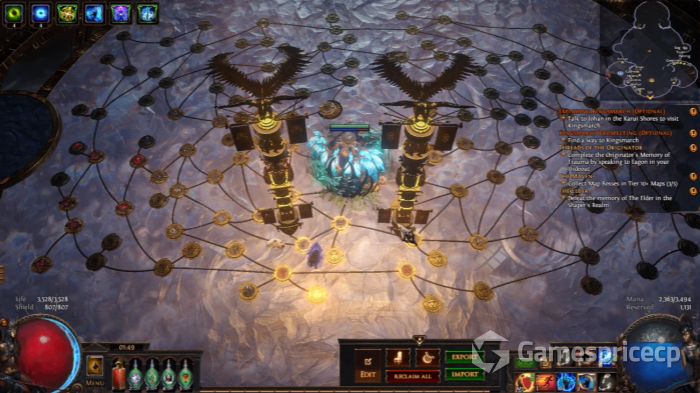
What Is Trial of the Ancestors?
Trial of the Ancestors is a tournament-style league mechanic where players participate in double-elimination tribal battles against AI-controlled teams. Instead of traditional ARPG combat, players engage in a tactical arena where the objective is to destroy enemy totems while defending your own.
Unlike normal mapping in Path of Exile, death in ToTA does not remove you from the encounter. You simply respawn at your own totem after a short delay. This creates a unique pacing where fights feel more like persistent skirmishes rather than binary fail/success encounters.
Silver Coins are the entry currency for the mechanic. These drop throughout the campaign and maps, especially in the second half of progression. They are extremely cheap in most economies and provide easy access to the system. Once used, they unlock a portal to the Trial, and after the first entry, players receive a permanent waypoint.
Core Gameplay Loop: Capture the Totems
At its heart, ToTA is a capture-the-totem elimination system. Each match is a battlefield where both teams attempt to channel enemy totems while defending their own.
Key mechanics include:
Killing enemies does NOT eliminate them permanently
All units respawn at their assigned totems
Matches are influenced by respawn timers and battlefield control
Victory is achieved by fully capturing all opposing totems
This creates a gameplay loop that is less about raw damage and more about map control, disruption, and tactical positioning.
The system is intentionally skewed against the player at higher levels, ensuring difficulty scales dramatically as ranking increases.
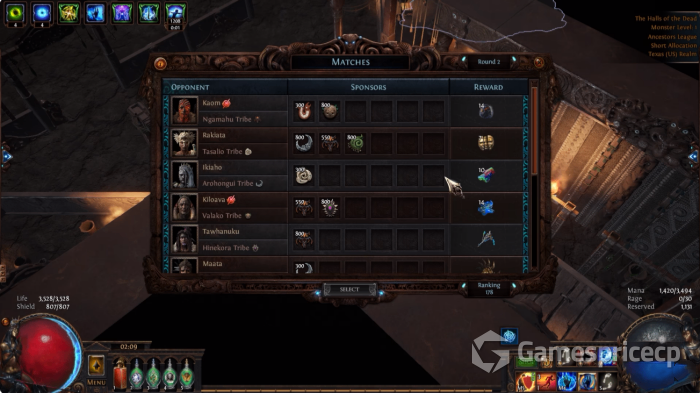
Rewards: Why Players Keep Coming Back
One of the strongest motivations for engaging with ToTA is its reward pool. Unlike many mechanics in Path of Exile, Trial of the Ancestors offers exclusive and high-value loot categories.
Major Reward Types:
Currency drops (Chaos Orbs, Divine Orbs)
Unique items (some historically exclusive)
Divination cards
Tattoos (passive tree modifiers)
Tattoos are particularly important because they can permanently modify passive skill trees, creating powerful optimization paths unavailable elsewhere.
Some tattoos have reached extremely high market value, with rare variants trading for multiple Divine Orbs or more, depending on league economy conditions. This makes ToTA not just a fun diversion, but a potentially lucrative farming method.
High-End Farming: Magebloods, Headhunters, and Lottery Drops
In earlier versions of Trial of the Ancestors, players reported some of the most extreme loot outcomes in league history, including multiple drops of:
Mageblood
Headhunter
These outcomes are rare, but they highlight the system’s lottery-like potential when pushed into deep progression tiers.
A major design feature of ToTA is that team composition affects long-term rewards, meaning early decisions influence later tournament outcomes. Choosing which NPC factions survive into late rounds can dramatically change loot quality.
Strategy Layer: Who to Eliminate Early
One of the most important strategic systems in ToTA is faction management. Certain tribes offer better long-term rewards, while others provide early favor but weaker endgame value.
Common strategic advice includes:
Preserve high-value tribes (such as Ramako and Mata equivalents)
Eliminate low-value or disruptive factions early
Prioritize opponents who offer strong favor gain but weak end rewards
Some NPC factions are intentionally difficult due to mechanics like:
Freeze-heavy compositions
Chaos damage pressure
Summoner-heavy defensive setups
Players often target these early to avoid complications in later rounds.
Team Composition: The Real Game Begins Here
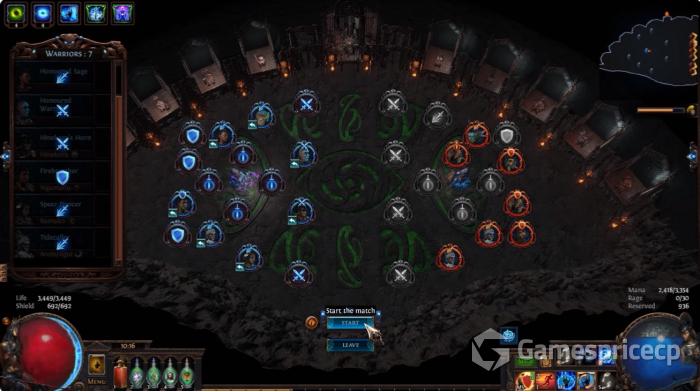
Unlike traditional ARPG systems, ToTA introduces a semi-autobattler team management layer. Each NPC has a role that influences battlefield behavior.
Core Roles:
Flankers
Fast units that bypass combat
Focus on capturing enemy totems quickly
Most important role in winning matches
Attackers
Frontline disruptors
Engage enemy forces directly
Create openings for flankers
Defenders
Protect your own totems
Often weaker impact but necessary for stability
Escorts
Flexible support units
Adapt based on leftover roster
High-tier strategies rely heavily on optimizing flanker speed and disruption tools, including environmental manipulation units that can block paths or stall enemy movement.
ZDPS Builds: The Endgame Optimization
As players climb toward higher ratings (eventually up to 2000+), the difficulty curve becomes extreme. At that point, most traditional builds struggle.
This is where ZDPS (Zero Damage Per Second) builds emerge as the optimal strategy.
Instead of dealing damage, these builds focus on:
Crowd control (CC)
Slowing enemies
Battlefield denial tools like Void Sphere-style effects
Constant disruption of enemy movement
A common approach is to dedicate a character purely to ToTA farming, abandoning mapping entirely. This specialization mirrors old-school PoE systems like deep Delve farming—extremely inefficient early, but incredibly powerful at scale.
Early Game Problem: Investment vs Reward
One of the most debated aspects of Trial of the Ancestors is its unbalanced early progression.
At low ranking:
Rewards feel weak (chaos, chance orbs)
Progress is slow
Investment feels unrewarding
At high ranking:
Rewards scale massively
Strategy becomes deep and complex
Loot quality improves dramatically
This creates a sharp divide: players either commit fully or abandon the system early.
There is very little “Alch-and-Go” viability here. ToTA demands planning, patience, and optimization.
Why Players Still Love It
Despite its complexity and early frustration, Trial of the Ancestors remains one of the most memorable mechanics in Path of Exile for several reasons:
It completely breaks ARPG conventions
It introduces tactical, non-DPS gameplay
It rewards deep system mastery
It offers unique loot not found elsewhere
It scales into one of the most rewarding endgame systems
Even players who only engage briefly often remember it vividly due to its distinct structure and pacing.
Final Thoughts
Trial of the Ancestors stands as one of the most experimental systems ever added to Path of Exile. It blends strategy, autobattler mechanics, cheap POE currency, and ARPG progression into a single-layered experience that rewards both mechanical understanding and long-term planning.
While its early-game pacing can feel slow and its difficulty scaling harsh, its depth and reward potential make it a standout feature in the game’s evolving ecosystem.
For players willing to invest time into learning its systems, ToTA transforms from a confusing side activity into one of the most profitable and engaging endgame loops in the entire game.
And as the Mirage League event shows, even years later, players are still discovering new ways to break, optimize, and enjoy it.